
The start of January often feels full of promise. New trainers, fresh plans, big intentions. But a few weeks in, motivation can start to wobble. There is even a name for it. Fitness app Strava has identified January 19th as “Quitter’s Day”, the point when most people abandon their fitness goals, with up to 88 percent of people giving up by the end of the month.
If this is where you find yourself, feeling less enthusiastic than you did on day one, you are not failing. You are completely normal.
The key to keeping running going past January is not more motivation. It is less pressure.
Routine beats motivation every time
Motivation is unreliable. Some days it shows up, some days it does not. Routine is what keeps you going when motivation fades.
Try to attach your runs to something that already exists in your week. For example, running on the same days, at the same time, or after the same activity. It becomes part of your routine rather than something you have to talk yourself into.
When running is simply what you do on a Tuesday or Saturday, it requires far less mental energy.
Having a plan removes decision fatigue
One of the biggest drains on motivation is constantly deciding what to do. How far, how fast, when, and whether it even counts.
Following a plan removes that friction. You do not need to overthink it, you just show up and follow the session.
This is especially helpful once life starts getting busy again. A plan gives structure without you having to micromanage every run.
Track progress without obsession
Tracking progress can be motivating, but only if it stays supportive.
Instead of focusing purely on pace or distance, focus more on things like:
- Runs feeling easier
- Recovering faster
- Feeling more confident heading out
These are all signs of progress, even if the numbers do not change much.
You do not need to analyse every run. Sometimes simply ticking it off is enough.
Life will get in the way, and that’s okay
There will be weeks where things do not go to plan. Work gets hectic, routines change, energy dips.
This is where flexible plans really help. Plans that adjust when you miss a session or need to shuffle days are far more realistic than rigid schedules that expect perfection.
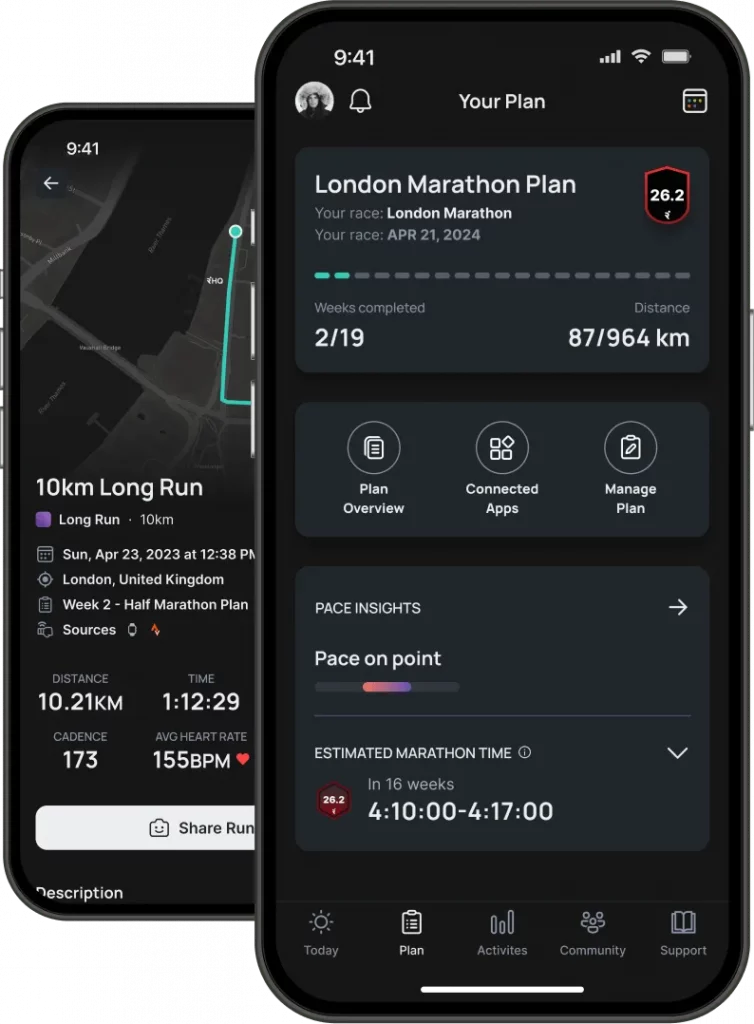
Apps like Runna work well for a lot of runners because they adapt around your life, rather than making you feel like you have failed if you miss a run. If you fancy trying it out you can use code RWR2 to get two weeks free and see if it’s a good fit for you.
Lower the bar on hard days
Not every run needs to feel productive, fast, or satisfying. Some days the goal really is just to get out of the door. A short run, a run walk, or even a brisk walk still keeps the habit alive.
Hard days are part of the process, not a sign that something has gone wrong. Allowing yourself to do less when energy is low often makes it easier to come back the next time. Consistency grows from flexibility, not from pushing through at all costs.
Some weeks you will feel excited. Other weeks you will do just enough. Both count.
If you can focus on routine, follow a plan that supports you, and let go of all or nothing thinking, running becomes something you can stick with long after January ends.
Stop asking “am I doing enough?”
It’s very easy to fall into the trap of wondering whether you’re running often enough, far enough, or fast enough. Social media and fitness apps don’t help with this, especially in January.
A much more helpful question is, can I realistically keep doing this next week? If the answer is yes, you’re doing enough. Running should support your life, not compete with it. If it feels manageable, sustainable, and doesn’t leave you dreading the next run, you’re on the right track.
Motivation comes and goes
Even people who have been running for years don’t feel motivated all the time. The difference is that they’ve learned not to rely on motivation to get them out of the door.
Long term runners keep going by adjusting, slowing down, shortening runs, or swapping a run for a walk when needed. They understand that motivation will come back, and that forcing it usually makes things worse. This mindset is what keeps running enjoyable over time.
Beginner friendly
running plans
If following a flexible plan sounds helpful, Runna is worth a look. You can explore it in your own time and use code RWR2 to try it free for two weeks.